The Impact of Pressure on the Heating System and the Operation of a Solid Fuel Boiler
A solid fuel boiler is the heart of a heating system, and its stable operation depends on the correct pressure in the system. Deviations from the norm can lead to reduced efficiency, increased fuel consumption, and emergency situations. It is important to understand the difference between open and closed heating systems, as the pressure is regulated differently in each.
Open Systems
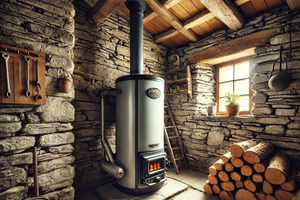
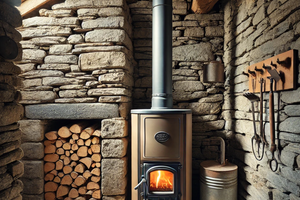
In open heating systems, the pressure is close to atmospheric (0 bar). The circulation of the heat carrier occurs naturally or with the help of a pump. They have a simple design but are less efficient due to:
- significant heat losses;
- large pipe diameters;
- natural circulation, which is less effective than forced circulation.
However, the main advantage of open systems is energy independence. If the electricity is cut off, circulation does not stop, which is a big plus.
The Impact of Low Pressure
Low pressure is not critical for an open system, but it is necessary to monitor the water level in the expansion tank. If the level drops, an airlock may form, which initially reduces the system’s efficiency and eventually may stop it altogether.
The Impact of High Pressure
In open systems, excess pressure is released through the expansion tank, so the risk of pressure increase is minimal.
Pressure Control and Regulation:
- Regularly check the level of the heat carrier.
- Avoid leaks and check the tightness of connections.
- Monitor the operation of the pump (if installed).
Closed Systems
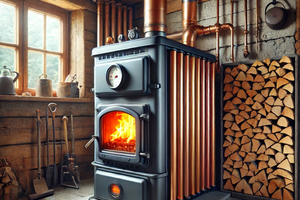
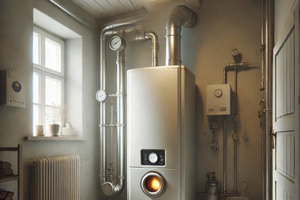
In domestic systems, the pressure is maintained within 1.2–2 bar with the help of an expansion tank and safety valves. They are more efficient because they:
- ensure stable circulation of the heat carrier;
- evenly heat all elements;
- reduce heat losses due to tightness.
However, they depend on electricity since a pump is necessary for heat carrier circulation.
The Impact of Low Pressure
When pressure drops in a closed system:
- airlocks form;
- heat exchange efficiency decreases;
- not all radiators heat evenly, increasing fuel consumption.
The Impact of High Pressure
If the pressure exceeds the norm:
- the safety valve activates, leading to heat carrier loss;
- the load on pipes and connections increases, which can cause leaks;
- equipment failure is possible, which is usually not covered by warranty.
Pressure Control and Regulation
Important! Each device has its own pressure standards, which are usually specified in the operating manual.
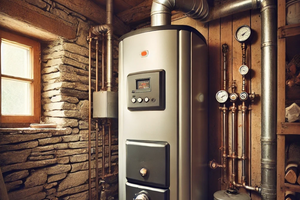
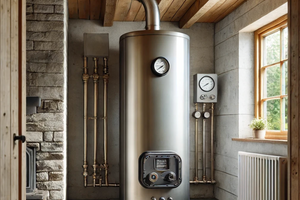
The safety group or protective valve is installed on the solid fuel boiler itself or behind it, on the pipeline, before all other installed system elements.
- Regularly check the pressure using a pressure gauge.
- Check the operation of the expansion tank and safety valve.
- Avoid heat carrier leaks and eliminate them promptly.
- Use automatic air release valves.
Methods for Pressure Regulation
Before the heating season starts, it is necessary to:
- in open systems – check the level of the heat carrier;
- in closed systems – check the pressure, and if necessary, gradually increase it to 0.8 bar;
- start the circulation pump to remove air;
- after starting the boiler in a closed system, the pressure stabilizes at 1.2–1.5 bar.
To reduce the pressure, you need to drain the excess coolant through a safety valve or any tap.
Clarification! A pressure of 1.5 bar allows the system height to be raised up to 15 m and increases the boiling point of water to 110°C.
Thus, monitoring and maintaining optimal pressure in the heating system is a crucial aspect of the safe and efficient operation of a solid fuel boiler. In closed systems, too low pressure can cause overheating and airlocks, and too high pressure can cause overload and emergencies, so the operating pressure in a solid fuel boiler should not exceed that specified in the equipment passport. In open heating systems, problems with low or high pressure are less critical, but it is necessary to monitor the level of the heat carrier and prevent its evaporation. Regular parameter checks, proper equipment adjustment, and preventive maintenance will help avoid problems and extend the service life of the heating system.
Postscript: It is recommended to periodically check the tap mechanisms so that they do not sour or stick, but work properly. This also applies to the safety valve.
Additional Recommendations
Boiler Selection. If purchasing a 12 kW solid fuel boiler, it is important that the system matches its capacity. Insufficient or excessive load affects pressure and efficiency.
Heat Accumulators. A heat accumulator does not affect pressure but allows for more efficient heat utilization. It ensures:
- boiler operation with maximum efficiency;
- reduced fuel consumption;
- maintaining a comfortable temperature even after combustion stops;
- continuous heat exchange between the boiler and the buffer with forced circulation and natural circulation through a bypass.