How to Avoid Smoke from a Solid Fuel Boiler: Main Causes and Solutions
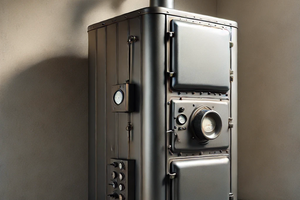
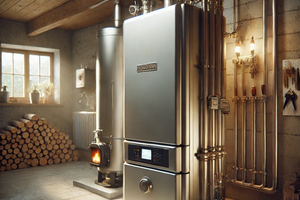
Purchasing a solid fuel boiler is an important step toward comfortable and autonomous heating. However, even the most reliable boilers can encounter issues, with one of the most common being smoke emissions. This is not a reason to panic but rather a signal to address the underlying causes. Let’s examine the main factors that cause smoke and how to resolve them.
Main Causes
Smoke emissions from a boiler can occur for many reasons. Sometimes, it’s due to improper operation, occasionally from the wrong choice of fuel, but most often, it results from an incorrectly assembled or poorly designed chimney that does not consider the building’s features. If you decide to buy a solid fuel boiler, it’s crucial to take care of all these nuances in advance to avoid future issues.
If you are facing this issue for the first time, consulting a specialist may help identify the exact cause.
How to Solve the Smoke Problem
The first step is chimney cleaning. Soot buildup inside the chimney can obstruct normal smoke flow, causing gases to return into the room. Regular chimney and boiler cleaning is an effective solution. Below, we will explore the key causes and their solutions in detail.
Before addressing the issue, carefully inspect the boiler to determine where the smoke is coming from.
The causes can be categorized as follows:
1. Installation Errors of the Boiler or Chimney
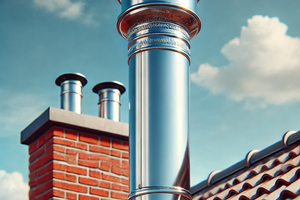
Every boiler has specific chimney installation requirements, including a minimum height (usually specified for stainless steel pipes) and an appropriate diameter. The horizontal section should not exceed 1 meter; if needed, it must be compensated by a vertical rise or, in some cases, an increased diameter. The figure below shows the positions for the end of the chimney pipe without taking into account the minimum height for positions: A, B and C. Position D is equivalent to a number of standing buildings or tall plantings and trees.

If smoke issues arise due to insufficient draft, check the height and construction of the chimney. The pipe may be too short or have too many bends, obstructing smoke flow. In this case, increasing the chimney height or adjusting its configuration can help. A 90-degree turn is equivalent to 1 meter of horizontal length—reducing resistance is possible by using two 45-degree bends instead.
In some brick chimneys, an inspection hatch is placed on the outer wall of the building, at the same or lower level than the boiler outlet. This can allow side winds to disrupt the draft, causing smoke stagnation inside the boiler or, worse, reverse draft, leading to smoke entering the room. This issue is especially noticeable in cold weather, when temperature differences between indoor and outdoor air intensify wind effects on the chimney.
2. Choice of Chimney Material
The material of the chimney affects its draft. Common problems include:
-
Poor thermal conductivity. For example, concrete does not maintain stable chimney temperatures, which can reduce draft. Cold chimney walls cool hot gases, causing condensation and soot buildup.
-
Condensation and corrosion. Condensation forms due to significant temperature differences between hot flue gases and cold outside air. This accelerates soot buildup, narrowing the chimney’s diameter and reducing draft. In addition, pipes without a special coating or made of low-quality material quickly rust, because condensate is not just water, it is an aggressive acidic environment, which is the most serious destructive factor. Thermal insulation can help prevent these issues.
-
Surface roughness. The rougher the surface, the more friction occurs as smoke moves through the chimney. This increases resistance, reducing heat evacuation and draft. Stainless steel and ceramic chimneys with minimal friction are ideal. Black steel, asbestos, or brick chimneys can also work, but their increased resistance must be compensated by height.
-
Tar and soot buildup. Rough chimney surfaces accumulate tar and soot faster, leading to clogs.
-
Insulation. Poor insulation or using materials with low insulation properties affects draft. Proper insulation maintains stable temperatures inside the chimney, improving gas flow and preventing condensation and soot buildup, which otherwise significantly reduce draft and cause smoke in the room.
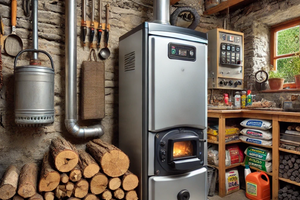
3. Use of Improper Fuel. Burning wet firewood or low-quality fuel (such as waste materials) clogs the boiler and chimney, reducing draft and causing smoke issues. Use dry, well-seasoned firewood or fuel recommended by the boiler manufacturer. Briquettes are a good alternative, as they are dry and have a higher heat output than firewood.
4. Chimney Blockages. If the chimney is not cleaned of soot and combustion residues, smoke can struggle to escape, leading to smoke entering the room. Regular maintenance is essential.
5. Insufficient Air Supply. Solid fuel boilers require an adequate oxygen supply for efficient combustion. Poor room ventilation can lead to air shortages, causing smoke buildup.
6. Impact of Weather Conditions
-
Strong winds can cause reverse draft, pushing smoke back into the room. Installing chimney caps or deflectors can improve draft and protect against weather influences.
-
Atmospheric pressure fluctuations during sudden weather changes can also cause the boiler to smoke, especially if the chimney is minimally tall. A taller chimney helps mitigate this issue.
-
Temperature differences between smoke and the surrounding air affect draft stability. During cold weather, the chimney may require a longer preheating period before functioning optimally.
Preventing Smoke Issues
To avoid future problems:
-
Use heat accumulators to enhance boiler performance. In the off-season, without a heat accumulator, the boiler practically operates in smoldering mode without warming up the chimney to normal temperature. This leads to the formation of condensate and deterioration of draft.
-
Regularly inspect the chimney and perform preventive maintenance.
-
Install carbon monoxide detectors to identify problems early.
-
Check boiler door seals to prevent smoke leaks into the room.
Conclusion
Smoke from a solid fuel boiler is an unpleasant surprise, but it can be resolved if you know where to look. Regular cleaning, proper fuel selection, adequate ventilation, and, most importantly, correct chimney installation will help prevent many issues. Attention to detail allows you to identify potential problems at early stages.
If you’re searching for high-quality heating equipment, consider heat accumulators for solid fuel boilers. They significantly improve boiler performance and make heating more comfortable and efficient.
P/S For most possible reasons, lengthening the height of the chimney will help, but you should not overdo it, and it must be insulated.
Tell us about your problems in the comments, let's figure it out together.
This article answers questions like: "What to do if my solid fuel or wood boiler is smoking?" or "Why is smoke coming back from my boiler?"